

The Gallery in Our Minds
How accurately do we remember the great works of art we have seen?

Life and the memory of it so compressed
They’ve turned into each other. Which is which?
Elizabeth Bishop, “Poem” (1972).
Three years ago I visited a major Hockney exhibition in Tokyo and wrote about it here. As I mentioned then, seeing the Blue Guitar etchings after many years set off a train of memories.
But what I didn’t add was that they also seemed smaller than I’d remembered, and much as I enjoyed seeing them again, they seemed rather slight among the other wonderful Hockney paintings on show.
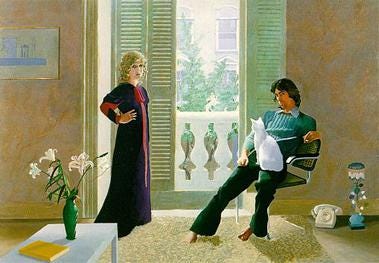
My reacquaintance with Mr and Mrs Clark and Percy was a different experience. It hadn’t diminished in size compared to my memory, but it seemed lessened in another way. The painting which had exhilarated me all those years ago in London felt a little airless – especially, perhaps, compared to the freedom of the pulsating landscapes in some of the later Hockney. Perhaps context and place make a difference as well as time.
*
About a year later I read an essay by Julian Barnes, who I’ve quoted here before, called Art and Memory. In it, he discusses how his memory – or expectations – of artworks have led to surprise or disappointment upon later viewings.
In the first example he gives, he buys a painting to complete his late wife’s collection of paintings and then realises that he had miscalculated – or rather, wrongly assumed – the size of the canvas he bought at auction online.
“I had seen the picture in an online catalogue, its size there at most about three inches by two. It had not been held up and shown to bidders in the room and online during the sale. I had imagined it as being a taut, concentrated picture of about ten or twelve inches by six or eight. Of course, the actual dimensions were printed in the catalogue, but I had paid them no attention because I knew the picture’s size, its exact, ideal size, without checking: it was a size which fitted in with the rest of my wife’s collection. [My emphasis]
The experience makes Barnes begin to consider the gap between what we see and what is in our minds.
“It made me reflect on the distorting distance that can invade between image and reality; between what we think we see, or hope to see, and what is really there; also, more widely, on how the reproduced image can hamper the way we look at art.”
*
Two hundred years earlier, in an essay published in 1822, Pictures at Burleigh House, William Hazlitt explored a similar theme. Revisiting the country home after a long absence, he writes of the works on display:
“All is still the same, like a petrification of the mind — the same things in the same places; but their effect is not the same upon me. I am twenty years the worse for wear and tear.”
He reported that paintings that had previously delighted him no longer did so.
“The Rembrandts disappointed me quite. I could hardly find a trace of the impression which had been inlaid in my imagination.
Instead of broken wrinkles and indented flesh, I saw hard lines and stained canvas. I had seen better Rembrandts since, and had learned to see nature better.” 1
*
Later in his essay, Barnes addresses art and memory, commenting, “More common than the falsifying effect of anticipation is the falsifying of memory.”
He recalls a painting by Félix Vallotton, The Lie, which had impressed him thirty years earlier. He then goes on to describe his reaction to encountering the painting again.
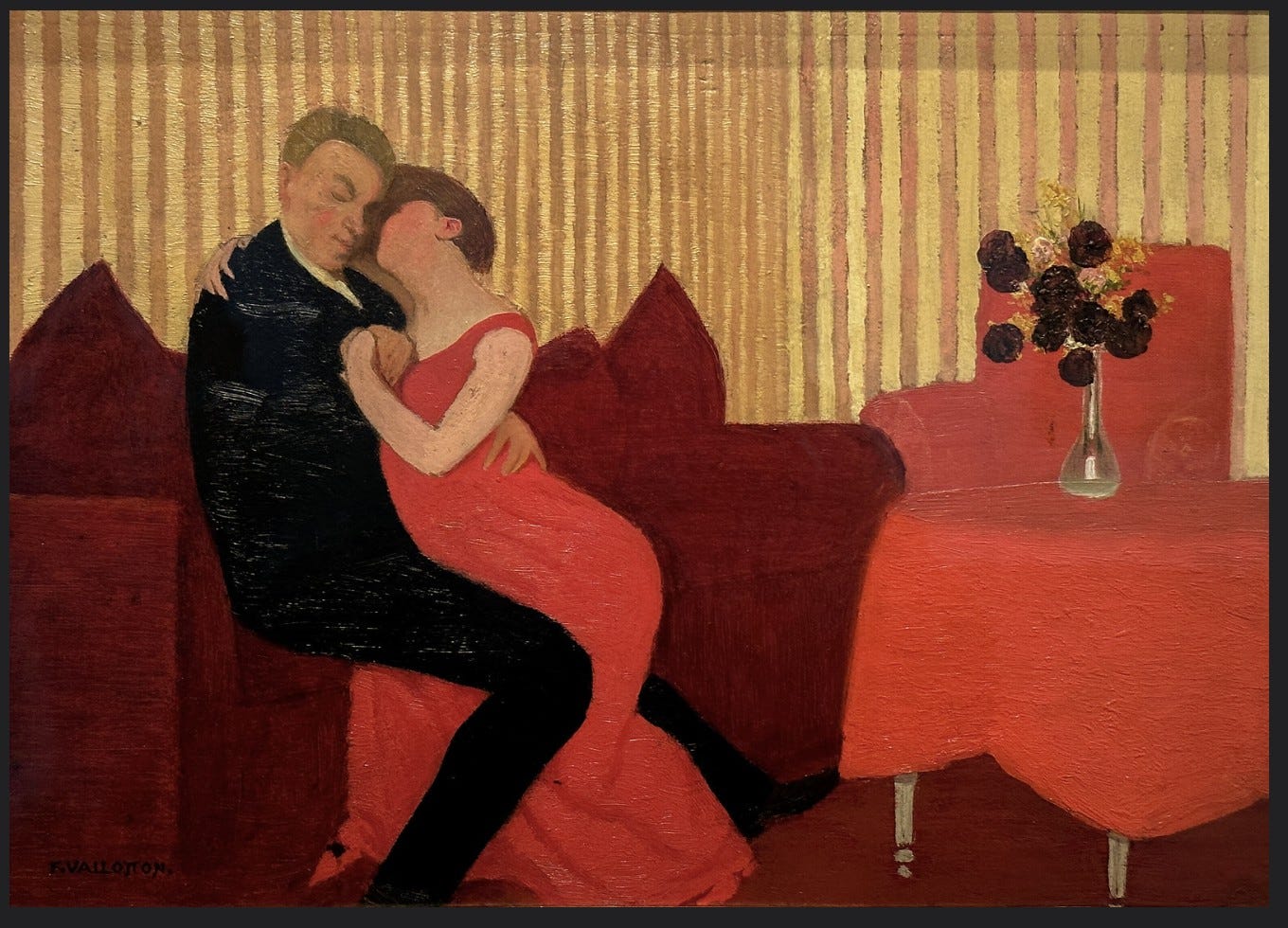
About ten years later, I saw it again, this time in its native Switzerland, in a retrospective of Vallotton’s work. I was genuinely shocked by how small it was – indeed, the smallest picture in the whole show. Its radiance in my memory must have swelled it to about four times the size of what was now in front of me.
In the rest of the essay, he catalogues other instances of misremembering great artworks he’d seen. And from this he develops a tentative theory:
As far as it is possible to generalise, I think we misremember small pictures as being larger than they are, and large pictures as smaller. Also, what we are remembering is not just the painting itself but its effect on us; and some parts of it will inevitably remain fresher than others.
*
Perhaps Barnes’ theory can apply not just to paintings but also to other kinds of works of art; in my case, to Ryōan-ji Temple in Kyoto. This happened to me with two visits to the famous garden separated by a significant gap of time.
I first visited in the mid-1990s when I lived in Kyoto and was hugely impressed by the design and the atmosphere of calm the garden exuded (which miraculously survived even the arrival of a busload of schoolchildren).
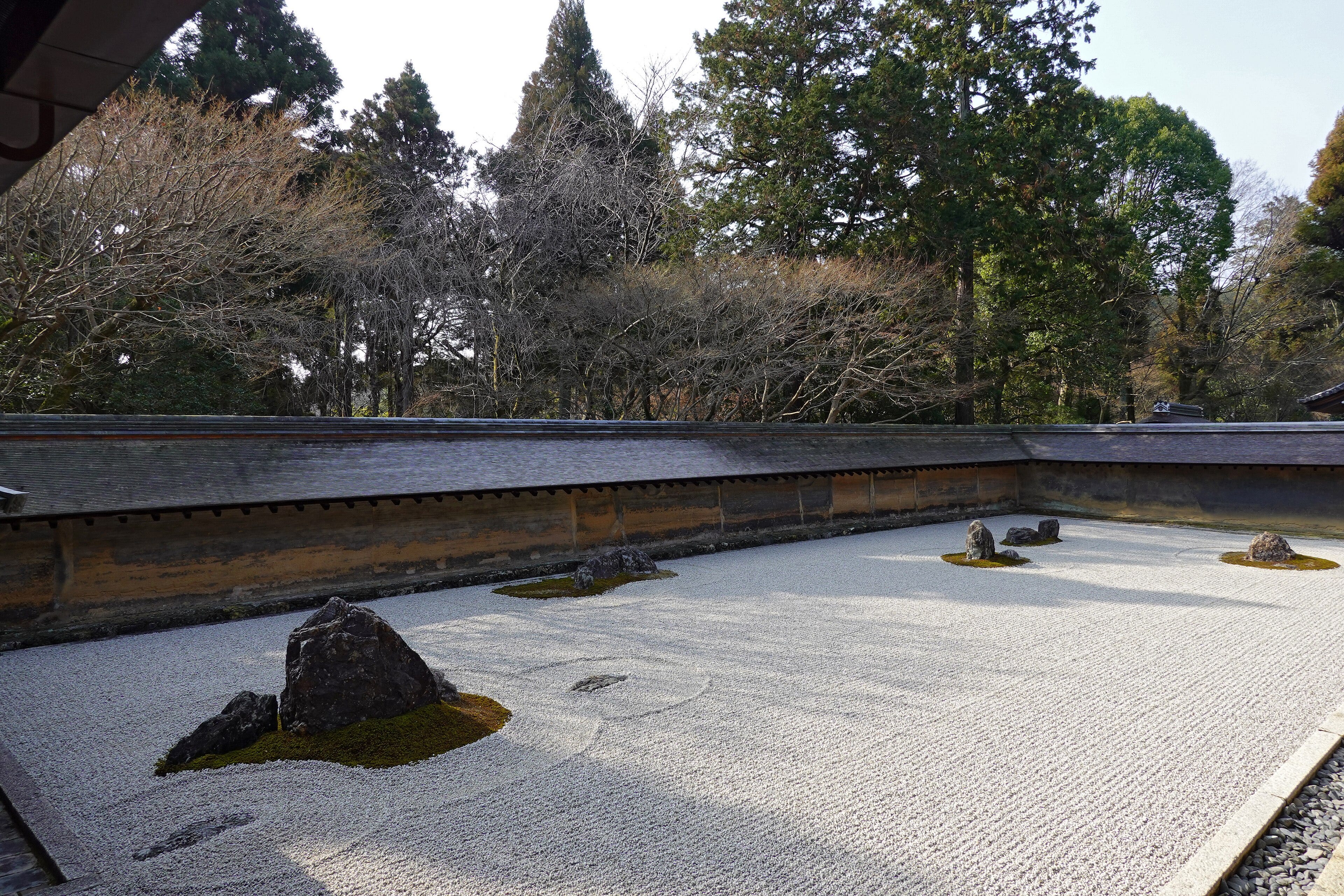
Nearly twenty years later, I visited again. This time, the celebrated and still exquisite garden seemed smaller and, I confess, had lost much of its varnish of mystique. It hadn’t exactly deteriorated into a mere expanse of rock and gravel (I guess that would have been a more literal ‘petrification of the mind’ than Hazlitt’s), but something in the harmony that had stayed in my memory was no longer present at the site. I came away both puzzled and disappointed.
*
Hazlitt, though, wasn’t at all dismayed by the effect the Rembrandts at Burleigh House had on him. In fact, he seems to have given more importance to the image in his mind.
Was it a disadvantage, then, that for twenty years I had carried this fine idea in my brain, enriching it from time to time from my observations of nature or art, and raising it as they were raised; or did it much signify that it was disturbed at last? Neither. The picture was nothing to me: it was the idea it had suggested. The one hung on the wall at Burleigh; the other was an heir-loom in my mind. Was it destroyed, because the picture, after long absence, did not answer to it? No. There were other pictures in the world that did, and objects in nature still more perfect. This is the melancholy privilege of art; it exists chiefly in idea, and is not liable to serious reverses.
And he goes on (Hazlitt always goes on) to make this comparison:
If an old friendship is broken up, we cannot tell how to replace it, without the aid of habit and a length of time. But a picture is nothing but a face; it interests us only in idea. Like the possessor of a splendid collection, who is indifferent to or turns away from common pictures, we have a selector gallery in our own minds. In this sense, the knowledge of art is its own exceeding great reward.
I have reflected on Hazlitt’s fine phrase, ‘a gallery in our own minds’. Is this the place, then, where art – or at least the enjoyment and appreciation of it – chiefly resides? In our heads?
*
Barnes also finds consolation in his experiences but follows a slightly different route in his thinking. He says,
Perhaps the prospect of revisiting a great work of art makes the memory tremble, as if you are going to have to sit an examination paper. And is it, finally, a bad thing if memory lets us down? Not necessarily. It might confirm some ongoing, organic relationship between ourselves and the work in question.
Unlike Hazlitt, who is happy to contemplate his own mental gallery, Barnes sees the interplay between mind and object and the way it shifts over time as perhaps one of the keys to how art can work its varying effects on us.
*
In the autumn of 2003, newly arrived in Shanghai as head of the British Council office there, one of the first major projects I was involved in was the installation of Antony Gormley’s magnificent Asan Field. This work was a vast collection of tiny terracotta-clay figures fashioned under the artist’s guidance by a community in Guangdong province in southern China. Asian Field was also shown, each time at a different scale, in Beijing, Guangzhou and Chongqing. But the Shanghai edition, held in the decommissioned Shanghai Number Ten Steelworks, was the biggest (Shanghai, in my experience, always wanted to be the biggest or the best). 2
There were other colleagues, much better qualified than me for the task, who actually supported the coming together of this colossal, dizzying work. 3 However, I was impressed by what I saw of the compelling process of the installation of the figures and the preparation of the highly industrial and unpretty venue. My sense of acute interest in the process was despite (or partly because of?) the behind-the-scenes disputes that often seem to accompany such major works.
The scale and majesty of Asian Field, in its suitably gritty and curiously atmospheric setting, stayed with me for years. For someone who had just arrived to live in this vast country with a population of over one billion people and a city at the vanguard of China’s astonishingly rapid economic development, Asian Field seemed tonally perfect. The artwork seemed to embody the energy and expectation I felt at being in Shanghai at that time.
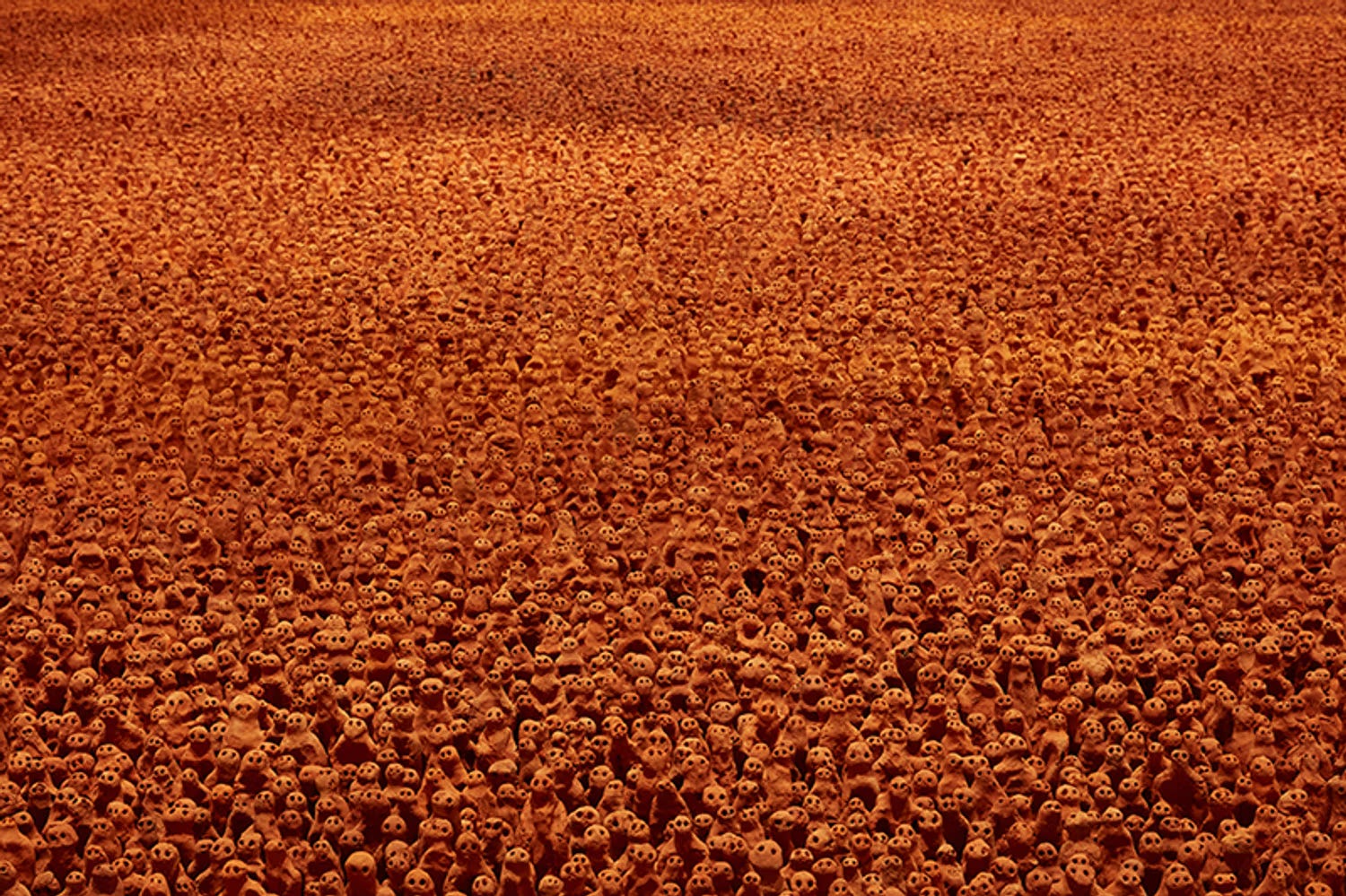
Eighteen years later, I was in Hong Kong at the time of the opening of its magnificent new M+ gallery. One of the inaugural exhibitions was Asian Field. I was excited at the prospect not only of viewing the wonderful collection of modern Chinese art on display at M+, but also of reacquainting myself with Gormley’s remarkable work.
The massive collection of tiny figures (though smaller in number than in Shanghai) still created a silent gasp when I saw it and remained impressive. The work in its essence hadn’t changed.
And yet. Whether it was the smaller scale, the polished gallery setting or the dampening effect that Covid was still wreaking on our lives, the work now lacked for me the vitality that it had pulsated with in the Shanghai Number Ten Steelworks nearly two decades before.
Or was it that I had changed over the course of those eventful years and was less receptive to the grandeur of the work?
Or perhaps, as with Barnes, my more muted reaction to the work was just part of “some ongoing, organic relationship between the two of us and the work in question”.
Or, in echo of Hazlitt’s words – “the melancholy privilege of art exists chiefly in idea” – could it have been that the teeming wonder of Asian Field in Shanghai, no longer physically housed in the long-demolished Shanghai Number Ten Steelworks, had taken up permanent residence in my mind and resisted all further occupation?
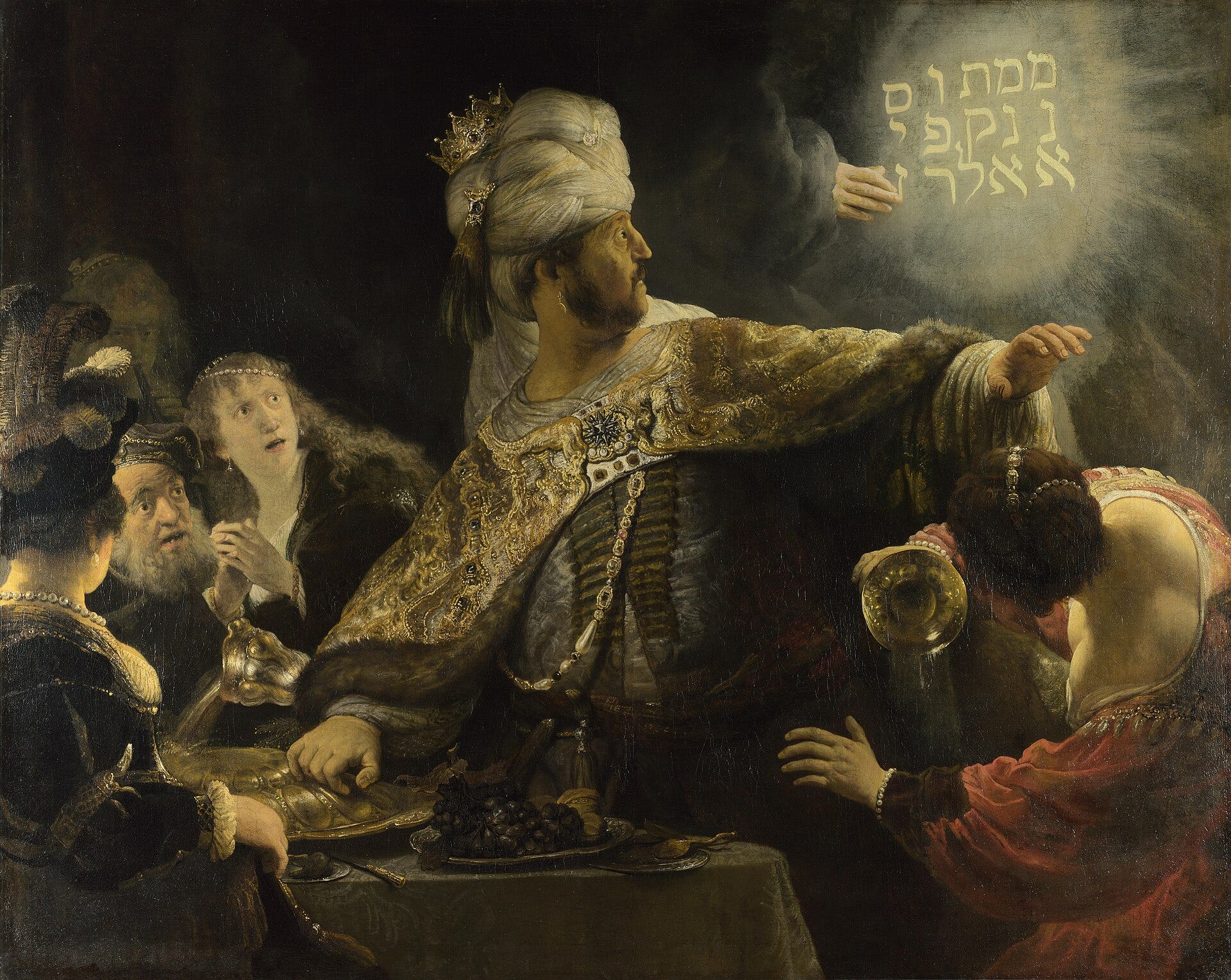
In his essay On the Pleasure of Painting (1820), which looks back on an earlier period in his life, Hazlitt had written, “I had seen an old head by Rembrandt at Burleigh House, and if I could produce a head at all like Rembrandt in a year, in my lifetime, it would be glory and felicity and wealth and fame enough for me! The head I had seen at Burleigh was an exact and wonderful facsimile of nature.”
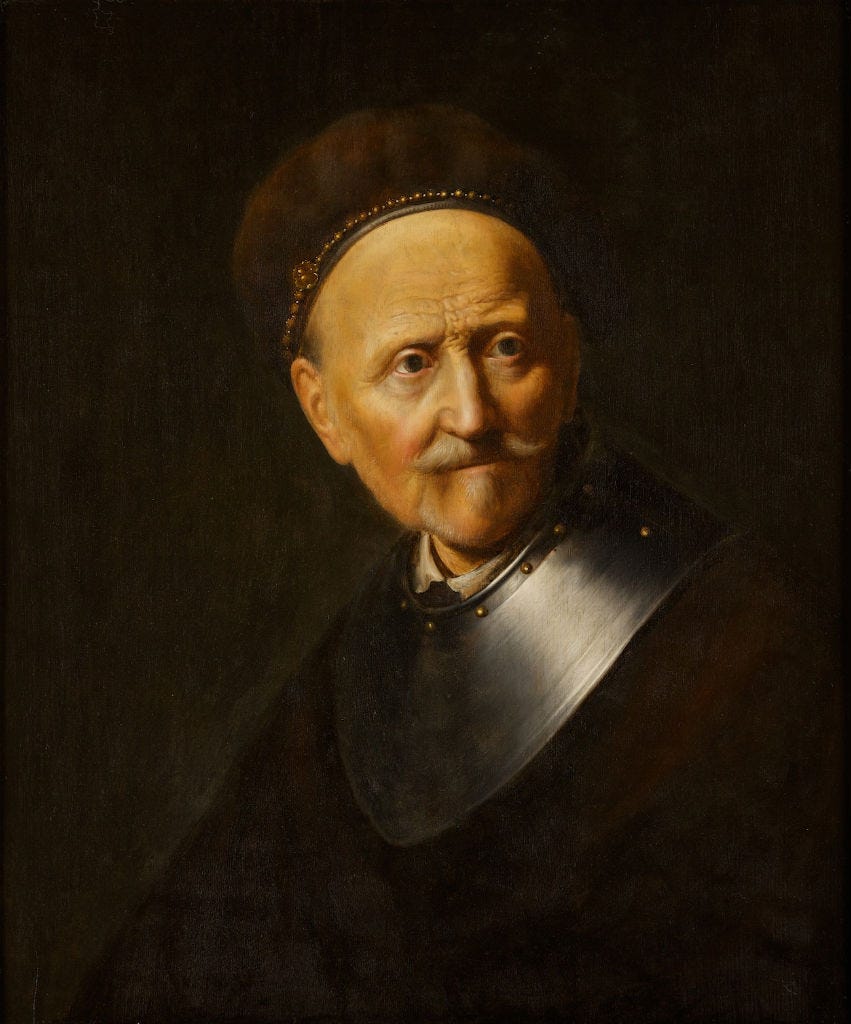
It doesn’t change the basic argument by Hazlitt, but it appears from the research I have carried out that it’s possible that what he saw at Burleigh House (now written as Burghley) were paintings that had been misattributed to Rembrandt (there had apparently been an earlier lucrative craze of attribution). In any case, the modern online catalogue of BH contains no paintings by Rembrandt but some by his followers. I have included one of them above.
Below is a genuine Rembrandt which Hazlitt knew and wrote about in his 1820 essay On the Pleasure of Painting:
The steelworks were used as a gallery for modern sculpture for a time afterwards, before their eventual – and inevitable – demolition.
My own direct involvement, though, was more managerial than anything approaching curatorial. Almost my first act on taking up this new and exciting role was to sign the contract for the construction of the toilets for the expected visitors to the then-derelict site. I guess someone has to take care of these things.
You've raised such a fascinating question, Jeffrey, and brought to bear on it the thoughts of some fine art writers. I experienced something of the same feeling after attending years ago a huge retrospective of the work of Georgia O'Keeffe, and I've wondered since if my sense that not all her work has stood the test of time was because the exhibition included too much. I've come to the conclusion that I much prefer spending time with a small number of very good works than taking in so much that my emotional and mental witnessing of the art is left tested and equivocal.
I think, too, that the question applies to much else we experience that remains through memory or is forgotten. For example, there is a very interesting and brilliantly written book by Viet Thanh Nguyen titled "Nothing Ever Dies: Vietnam and the Memory of War." Nguyen exposes North and South Vietnam's differences, and they are many, including their ways of memorializing the dead. He devotes a section to aesthetics. He writes about the "contradictory facts of the losers and bystanders, stating, "These facts are not memory but are interpreted, revivified, and placed into stories by memory's mechanisms, stories that change from time to time to suit the interests of the living." He also quotes Joan Didion, who has stated, "Memory fades, memory adjusts, memory conforms to what we think we remember." It's mutable an malleable.
I'm a fan of Gormley, by the way.
So true. Isn’t it a wonder how our memory—and mind—works? Then I thought of the movie Inception. Now I have to watch the movie again; I last saw it some 15 years ago and I wonder what watching it again would make me feel. Maybe I should watch Nolan’s Odyssey afterwards… Oh gosh, see how the mind works? 😄