

Distant Correspondents
Letters home across the "weary world of waters"

“Sir, more than kisses, letters mingle souls.” This was how John Donne began one of his verse letters to his university friend Sir Henry Wotton, who later became English Ambassador to the Republic of Venice.
Wotton was himself a prolific letter writer and a polyglot. On his way to take up his post in Venice, he inscribed the words “Legatus est vir bonus peregre missus ad mentiendum Reipublicae causa” in an album amicorum, which was somewhere between a modern guestbook and a LinkedIn profile. The sentence can be translated as “the ambassador is an honest man sent to lie abroad for the sake of his country.” 1
Back in the 20th century, while in public service overseas (and, of course, never sent to lie to anyone), the letters home I would write to my parents probably didn’t allow me to “mingle souls” with them, but they were important to me. I hope they were for my parents, too.
Donne’s letter to Wotton would have taken some time to reach him at the turn of the 17th century. This delay was still a feature of letters at the time I was writing them, three hundred years later. It would sometimes be two weeks before my parents would receive a letter from Quito or Kyoto, and even if they replied immediately, I might not receive the reply for another two weeks. So if I’d asked a question, like “how’s X?”, I might have had to wait a month for the answer.
These days, of course, we are accustomed to the near-instant receipt of messages irrespective of distance. And we fret when things don’t arrive or are not read immediately. Perhaps we were more patient back then.
It’s likely that time delays will affect radio communications between astronauts elsewhere in the solar system in the future. But this would probably be nothing like that experienced by earlier human explorers and colonisers.
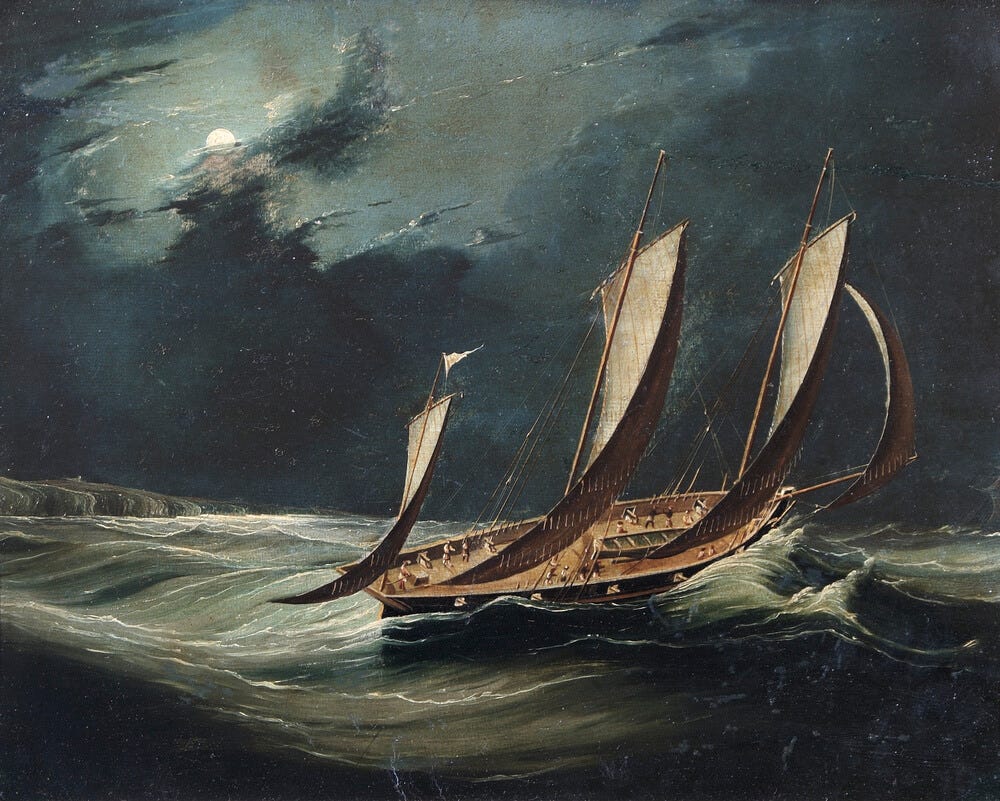
In the early 19th century, letters between Britain and its Australian colony could take six months or more to arrive. This kind of extreme delay in a correspondence was highlighted in typically brilliant and hyperbolic fashion by Charles Lamb. Writing to a friend in Australia, he said, “The weary world of waters between us oppresses the imagination.” 2
He goes on to ask, in frustration, at the time lapse between writing and receipt,
What security can I have that what I now send you for truth shall not before you get it unaccountably turn into a lie?
He continues:
It is difficult to conceive how a scrawl of mine should ever stretch across it. It is a sort of presumption to expect that one’s thoughts should live so far. It is like writing for posterity.
Even the language itself might change or fall into disuse, he says, during such a long passage:
My heart is as dry as that spring sometimes proves in a thirsty August, when I revert to the space that is between us; a length of passage enough to render obsolete the phrases of our English letters before they can reach you.
*
In reality, even if the language doesn’t change between dispatch and receipt of the letter, the correspondent’s own condition or feelings are likely to. I was reminded of this aspect of letter writing when I recently read Elizabeth Taylor’s novel, A View of the Harbour 3
Here the delay in transmission from a schoolboy at boarding school to his mother, Tory, leads to a result which is pathetically comedic as the mother reads out the letter from Edward to her friend, Beth:
‘Dear Mummy,’ Tory read, ‘I hope you are well I am. Please send envelopes. It is not very nice here. And stamps. I have a bad throat. Other boys have pots of honey. I am having a lovely time. Regards. Yours truly Edward.’
Tory’s friend, Beth, then comments:
‘Oh, dear,’ said Beth. ‘They just don’t think what they’re saying. They write what they can spell. I remember when Prudence went away once. She wrote: “I am in agony. I cannot say what.” When I telephoned, I discovered that she couldn’t spell diarrhoea — indeed, who can? — and was better anyway long before the letter arrived. I shouldn’t worry.’
The letters from Edward to Tory remind me of letters written by my father during the Second World War when he was briefly evacuated from the English naval port of Portsmouth. One of these began this way:
Dear mum,
Please send me some money and apples and other things to eat. I am not very happy here.4
*
Both the fictional Edward in A View of the Harbour and my father were disarmingly honest and straightforward in their communication. This sincerity can fade under the pressures of later life. Sometimes that might be for good reasons. For example, like many young adults writing to my parents, from university onwards, I aimed to carefully manage the story I gave of my life, editing out incidents that might cause concern, such as getting lost in bandit country on Christmas Eve. I didn’t want them to worry.
However, sometimes the reasons for editing or embellishing the story might be more self-serving. A classic example of this is Hernán Cortés’s letters to Charles V of Spain. As a soldier who had gone rogue and disobeyed orders but then found himself successful in his campaign to conquer parts of Mexico for Spain, Cortés strove to put himself at the centre of a narrative that served exclusively the greater glory of Spain and its king. The letters were crucial in his attempt to create a favourable narrative about his actions and save himself both from the king’s wrath and the machinations of his enemies.
However, one feature of Cortés’s letters that was perhaps less self-serving was his astonishment at what he saw in this (to Europeans) new and strange land.
Decades ago when I lived in Spain, I was struck by something I read in a magazine interview with Gabriel García Márquez. As usual, he was asked about the term ‘magic realism’. Part of his slightly weary response was to cite – almost as an early example of the genre – those five letters sent by Hernán Cortés back to Spain.
Unlike the creeping obsolescence of language that Lamb imaginatively thought he was battling against, Cortés’ challenge, as García Márquez saw it, was to discover or create new words to describe the new sights – the magical new reality – that he was seeing.
In his second letter, he wrote,
I am fully aware that the account will appear so wonderful as to be deemed scarcely worthy of credit; since even when we who have seen these things with our own eyes, are yet so amazed as to be unable to comprehend their reality. 5
A more poetic and political description of a similar episode was by Jamaica Kincaid 6 In her essay In History, Kincaid writes of Christopher Columbus, “He couldn’t find enough words to describe what he saw before him: the people were new, the flora and fauna were new, the way the water met the sky was new, this world itself was new, it was the New World.”
For Kincaid, though, this naming in this case was a form of erasure, ignoring what came before.
Less politically, but also eloquently, Hazlitt wrote, “There are more things in nature than there are words in the English language, and he must not expect to lay rash hands on them all at once.” 7
My own letters were probably not very “exotic” in their content. Though I may have written about cuy in Ecuador. Or even about coyote in Mexico. Both are words that entered Spanish from local languages, as the animals were not found in Europe. 8
*
I often found myself putting off writing a letter home, and not only because I was stumped for words to use but also because almost all writing, as we know, can be hard work. Japanese writer Natsume Sōseki, himself also a distant correspondent for part of his life, wrote about the difficulty of letter writing in his early novel Botchan (1906), where the eponymous hero baulks at writing home to his former maid and nanny Kiyo, who is like a mother to him.
Her request had been that I should write her a letter with more detailed news; so I must get it done with care. But as I took up the rolled letter-paper, I did not know with what I should begin, though I have many things to write about. Should I begin with that? That is too much trouble. Or with this? It is not interesting. Isn’t there something which will come out smoothly, I reflected, without taxing my head too much, and which will interest Kiyo. I grated the ink-cake, wetted the writing brush, stared at the letter-paper—stared at the letter-paper, wetted the writing brush, grated the ink-cake—and, having repeated the same thing several times, I gave up the letter writing as not in my line, and covered the lid of the stationery box.
Botchan sums it all up this way:
To write a letter was a bother. It would be much simpler to go back to Tokyo and see Kiyo.
I know what he means.
Sōseki’s hero gives up the idea of writing but is still wracked by guilt until he hits upon a useful bit of magical thinking:
Then I thought this way; If I am thinking of her from my heart, even at such a distance, my sincerity would find responsive appreciation in Kiyo. If it does find response, there is no need of sending letters. She will regard the absence of letters from me as a sign of my being in good health.
A distant correspondent like Botchan, I did at least commit pen to paper sometimes, though I was not as regular a writer as I should have been. There were perhaps times when I gave in to the weakness displayed both by Lamb and by Botchan and didn’t write for a few weeks at a time.
Botchan’s philosophy could be summarised as “it’s the thought that counts”. That’s often questionable wisdom. But I recall that my mother used to tell me that sometimes she would think through doing something (perhaps writing a letter to her son) and then somehow come to believe – really believe for a time – that the task was already completed. 9
There were, no doubt, months when no letter with a foreign stamp thumped onto the hallway carpet next to the front door of my parents’ house for a few weeks because the effort of writing across the “weary world of waters” had been too much for me.
But now I wonder whether, on such occasions, my mother – aware of her tendency to live her life in her own head – might have given me credit for following her practice – for having written marvellous letters in my mind just for her.
And if she did, perhaps the unhindered magic and the unchecked realism of those unwritten letters would echo in her heart just as much as – maybe even more than – any self-conscious or stilted missive I might actually have sent her.
Donne’s poem, from which I quoted at the start, continued in this way: “For thus, friends absent speak.”
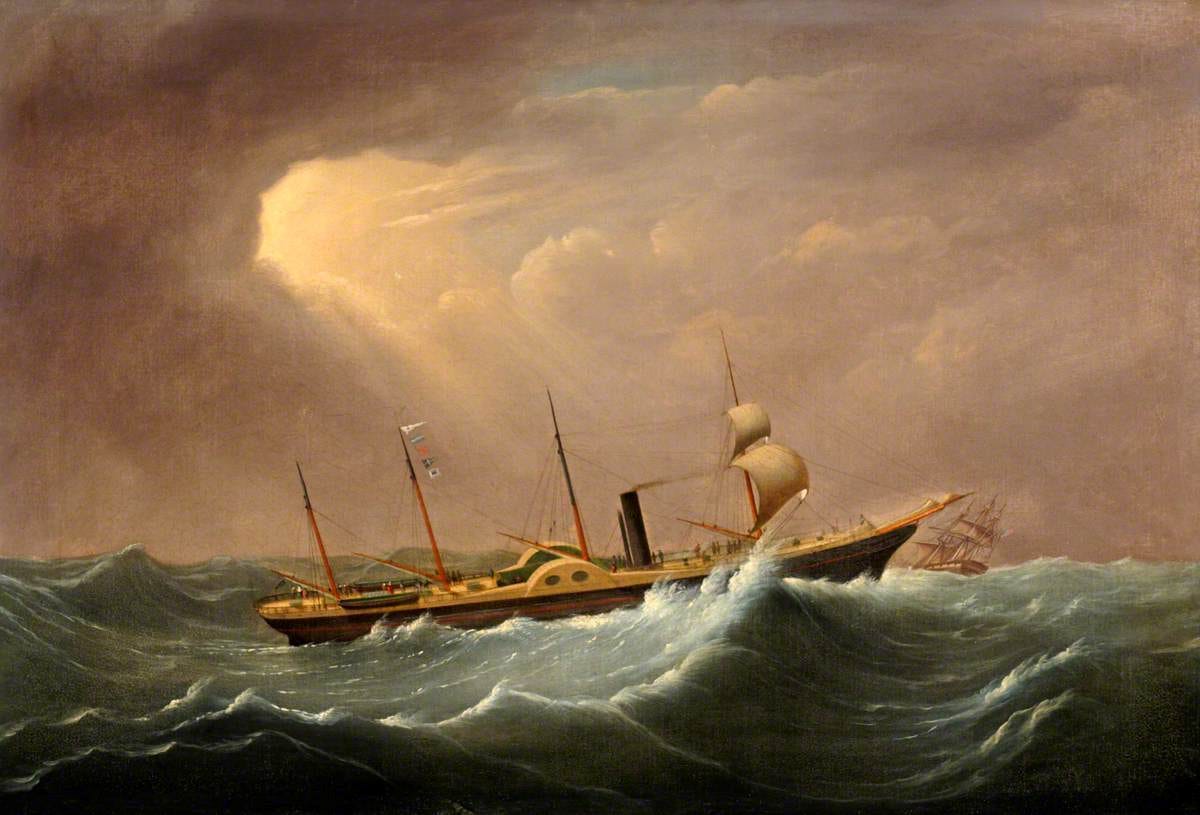
Perhaps letters “mingling our souls” are not the only vessels to allow absent friends to speak. Maybe our thoughts, our hopes, and our solitary contemplations of love can also help us speak to those we love across the weary waters of the world.
Writing this incautious phrase came back to haunt Wotton, rather as I have seen colleagues in my career as a kind of cultural ambassador with the British Council get into trouble or even lose their jobs through careless use of social media. For more on Wotton, read here.
“Distant Correspondents” by Charles Lamb in the Delphi Complete Works of Charles and Mary Lamb (Delphi Series Eight Book 8, p. 1100). Kindle Edition. Other quotes from Lamb here are from the same source.
My thanks to laura thompson, Ann Kennedy Smith and June Girvin for all (and separately) recommending the novels of Elizabeth Taylor.
In my father’s case, though, it turned out that the negative feelings about the place were more long-lasting than that. He returned home a few months later.
Accessed here. I’m grateful to From Life with Victoria Olsen, from whose Substack I learnt about Kincaid’s essay.
“On the Difference Between Writing and Speaking.” (published in 1826).
‘Cuy’ came from ‘quwi’ in Quechua. It’s a guinea pig, whose wild ancestor was Cavia tschudii. ‘Coyote’ derives from the Nahuatl word ‘coyōtl’.
Perhaps a case of what (I believe) is referred to in psychology as a “source monitoring error”.
When my eldest brother was in Vietnam, I used to write to him and others in his troop. Our mother wrote nearly daily. Letters in return always arrived long after those we sent, and it was always worrisome when a month or two would go by and we'd heard nothing. I've always wondered what became of the men other than my brother. My brother, who once wrote that he "hated Vietnam with a purple passion" - the only line I've ever remembered reading in any letter he sent home, never spoke about them.
Various museums and the Smithsonian, in attempting to digitize its collections, every so often put out a call for help reading letters, such as those from the Civil War or correspondence among artists and their dealers; many people usually respond. While some letter collections can be scanned, others, because of their fragile condition or because the cursive is "unreadable" (because it's no longer taught), seem to take the most time. The letters in fact contain a lot of history and the volunteers for the activity all report it is a wonderful way to become acquainted with what life was like centuries or decades ago.
I don't know if the ubiquitous emails will replace letters as a preserved form of history. I know that some writers, for purposes of donating their papers to institutions, print out and save emails. Still, I can't imagine as a researcher slogging through emails, which just don't seem to convey anything of the art or the romance or the anticipation that went into writing letters and receiving replies. Even going to the post office for stamps or envelopes used to be an occasion for us when we were young. And for my son, when he was very young, there was that anticipation of sending off a letter to the North Pole and having to wait until Christmas for Santa's reply.
Beautiful post, thank you. Here's to Elizabeth Taylor! View of the Harbour was my first and it was instant love... that letter is so brilliant.