

The Misanthrope
A chance encounter with a Paris taxi driver and a statue threw me a kind of lifeline

I find mankind so odious that I should hate to have it approve of me.
Alceste in The Misanthrope.
A couple of years ago I visited Paris for the first time in a while, and having got off the Eurostar at the Gare du Nord, I was soon in a taxi on the way to my hotel. I sat in the front seat and found myself in a conversational mood.
The driver, grey-bearded, jovial in appearance and eager to talk, told me he was originally from Gabon, though he’d lived in France for many years. We chatted for the first part of the journey before my much-neglected French skills began to flag.
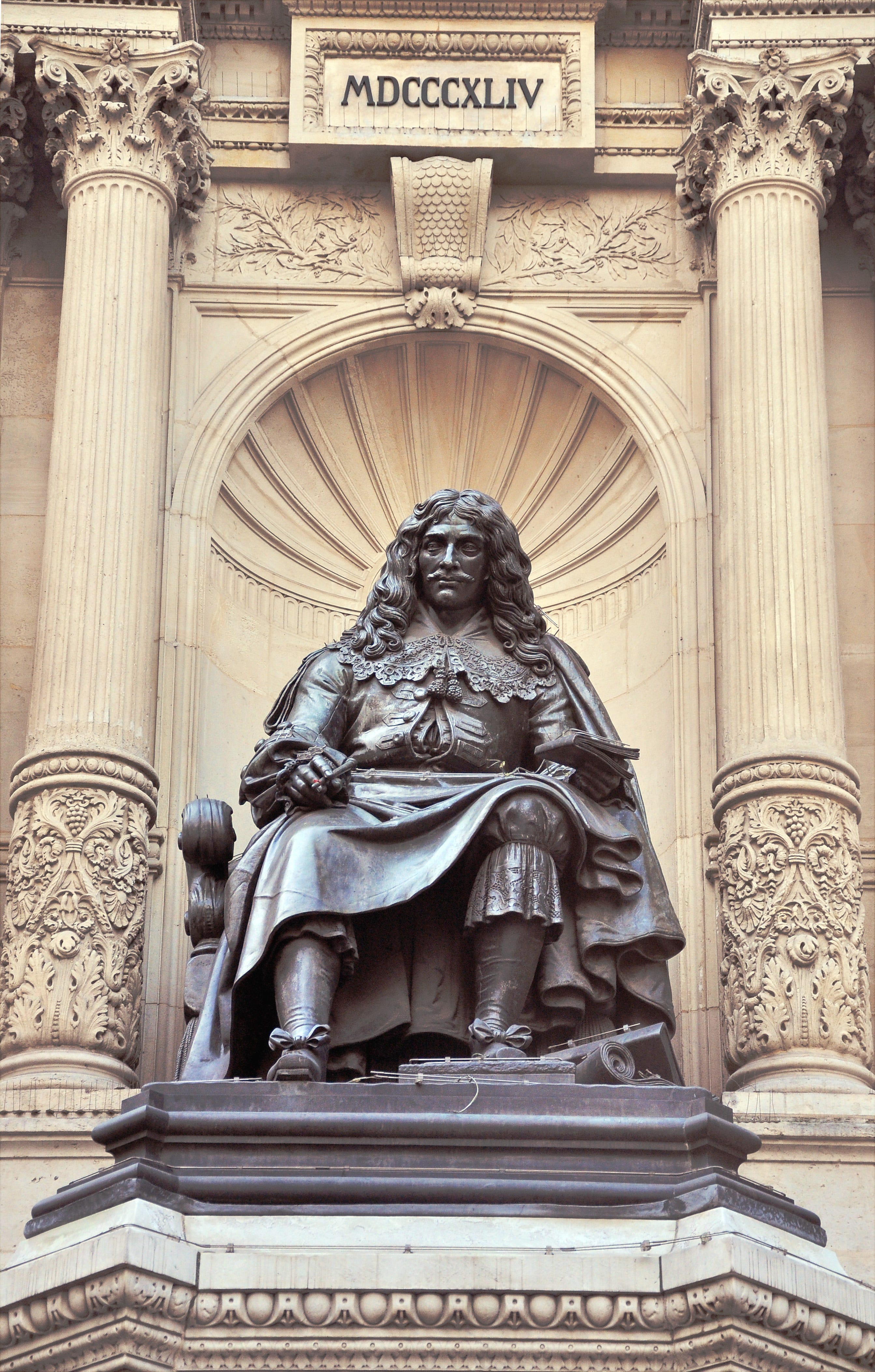
Just then the traffic slowed almost to a halt, and we passed a statue. It was a monument to Molière (1622–73), the French actor and playwright.
“Ah!” I said, pointing at the statue and grateful for another topic of conversation. “Molière! I studied him at school!”
“Me too,” said the driver, with a warm sparkle in his eye and an even warmer smile.
I felt a sudden warmth of solidarity. At that moment, this long-dead French writer had united me and my temporary companion. The driver’s face expressed joy tinged with nostalgia as he spoke of studying the playwright at school. It was as if, for that instant, despite our very different backgrounds and life experiences, we became classmates and confrères. It was, in a way, our own little tale of two cities, and I revelled in our common humanity as we shared our views on the plays we’d studied.
*
Just a few years previously, participating in such an exchange would have been very unlikely. For as long as I could remember, I’d shunned this kind of passing conversational intimacy with strangers and tended to regard humanity with suspicion and even indifference. I’m less reserved or standoffish now, but in those days – a good part of my adult life – I felt sympathy with Hamlet when he declared, ‘Man delights not me.’
I was, some might even say, something of a misanthrope.
*
Recently I reread Molière’s play The Misanthrope (1666) for the first time in a while (this time in English). In the introduction to my battered old Penguin translation of the play (1959), the translator John Wood invites us to imagine the playwright, in “a considered reply to the besetting forces of criticism and adversity,” saying, in essence, this:
I will show you a picture of a refined and cultivated society, men and women of breeding and fortune in the most congenial surroundings the age can afford; I will endow them with wit and beauty and grace in just distribution and proper proportion, and you shall see in them the contrasts between what men are and what they pretend to be, what they aspire to do and what they have it in them to achieve. You shall hear them saying one thing and meaning another, mark them jostling for advantage while proclaiming disinterest, vying with each other in vanity and hypocrisy, in heartlessness and indifference to virtue when they encounter it.
It sounds like the rather elegant deployment of a middle finger aimed at the French court in particular and the world in general.
The main character, Alceste, is the misanthrope whose disgust at the venality and hypocrisy of the age is vividly expressed in mordant barbs aimed at all of the other characters (except his beloved, Célimène, to whose faults he is blind for most of the play).
Appalled at the world he finds himself in, Alceste declares himself “determined to withdraw from all contacts with mankind.” He rages endlessly at how the world fails to live up to its professed ideals – and his. Rereading it now, I was slightly shocked by how much rage there is in the play.
*
The word ‘misanthrope ’ hadn’t been around for all that long before Molière wrote his play, and afterwards the term gained in popularity. It’s possible it even encouraged the word’s journey across the Channel to English.
Molière was almost certainly influenced by a slightly earlier French writer, Montaigne (1533–1592), who is often cited as an example of a misanthrope. The philosopher Ian James Kidd, who has studied this topic in depth, describes misanthropy as “the systematic condemnation of the moral character of humankind as it has come to be.”
In writing of Montaigne,1 Kidd says:
It’s very interesting that many philosophical misanthropes, like Michel de Montaigne, cling closely to friendship as the last and final guard against a slide into total misanthropy. Montaigne was misanthropic, but he considered his close friend Étienne de La Boétie to be a true person because he was free of those failings that characterise the mass of humankind.
Molière’s Alceste, by contrast, simply lets his passion for Célimène shield his eyes from her faults and scarcely seems to value the warm friendship offered by the level-headed and plain-talking Philinte. And whereas Alceste (perhaps ventriloquising the author) rants, Montaigne’s writings seem marked more by mournful sorrow than deep anger.
*
I don’t think I ever had the high expectations of our species in terms that would qualify me for this kind of philosophical misanthropy. And lacking Molière’s ire and Montaigne’s compassionate sorrow, my own version of misanthropy would show up more in the form of a glum background indifference or disdain.
A rather shameful episode might illustrate this, one which, as it happens, also took place in France. It was a couple of decades ago. I was sitting in a hired car in the car park of a supermarket, waiting for others in my group to complete their shopping. I don’t remember why I hadn’t joined the others – perhaps I was in a foul mood. I sometimes was in those days.
A hundred yards away from the car, I observed two men who were attempting to complete a minor repair to the roof of the supermarket’s warehouse. One held the ladder, and the other climbed it. They were clownishly incompetent, I thought, as the ladder, which they didn’t bother to attach to the building, became unstable and wobbled. At one point it almost fell. The fact that my grandfather, a roofer by trade, had fallen from a roof and lost most of his hearing as a result evoked no spark of sympathy in me.
“What a pair of idiots,” I thought.
As they finished their job, noticing me and perhaps a little shaken by their near accident – or maybe just embarrassed by having had a witness to their ineptitude – the two men approached my car. “Why didn’t you come to help us?” one of them loudly expostulated.
To my shame, I found myself answering in Spanish, which I rightly assumed they wouldn’t understand. I told them that I had no idea what they were talking about. Since they had no idea what I was saying, they indulged in a brief bout of cursing using vocabulary well beyond my modest level of French. They then shrugged their shoulders and gave the conversation up as a waste of time. A terse and dramatic little episode which was more modern French farce than classic theatre.
But why hadn’t I rushed to their aid? Of course, there was my English fear of social embarrassment. What if I had misunderstood the situation and they had gruffly dismissed me? Quelle horreur!
However, the main reason I did nothing was different. I’d thought, why should I help people who were being paid to do a job they were not properly equipped for or even competent to do? Their lack of professionalism and foresight should not become my emergency, I thought to myself, with slippery and bitter logic.
It was hardly one of my finest moments.
Usually, however, my “misanthropy” was hidden behind correct, even kind behaviour at work and a careful avoidance in my private life of too much social intimacy. I rarely formed close friendships that might act as a guardrail, as in Montaigne’s case, or even one to inveigh against, as in Alceste’s. I railed against the world in silence.
*
Looking back, I can see that over the years I have been drawn to writers who have been labelled misanthropic, at least in outlook if not in practice. These have included Jonathan Swift, Samuel Beckett and the wonderful Thomas Bernhard. Their writings served a purpose. Their barbs about the world and its inhabitants seemed to absolve me from the need to care too much about humanity. If my attitude ever made me seem, to use my mother’s pithy words, “a bit of a misery”, I could cloak myself, at least mentally, in the verbal blankets of disdain borrowed from those authors. I had distinguished precedents on my side.
I don’t think, though, in my long years of inaudible railing, that I ever self-identified as a misanthrope. In that respect, and perhaps most others, I was unlike Percival Lowell. He was the man who, a hundred and twenty years ago, coming from a “distinguished” family and desperate to make a name for himself, managed to fool himself and, briefly, half of humanity that there were canals on the planet Mars created by an intelligent life form.
As a young man feeling pressure from his family to achieve something significant, Lowell wrote, “I have…become decidedly misanthropic… and, with the exception of a few friends, should not feel many pangs at migrating to another planet.”
Nathaniel Rich, in the review essay I took this quote from, added that Lowell “migrated... to East Asia, the closest thing to another planet that he could imagine—a land blissfully ignorant of Lowells.”
I’m not sure I was fleeing any pressure to succeed when I left Europe to live in South America and then in East Asia. But I did come from a large family, and perhaps I yearned to escape their softening influence in my eagerness to sharpen the edge of my blunt disdain for humanity alone. Certainly, I found lands blissfully ignorant of Streeters.
*
At the end of The Misanthrope—with mild apologies for the 350-years-late spoiler—the priggish Alceste decides to put into action his long-standing wish to “escape from this triumphant abyss of ‘vice’”. His desire is to “search the world for some spot so remote that there one may be free to live as honour bids.”
It’s hardly a happy ending, though a gentler last word is given to his long-suffering friend Philinte. He gallantly declares his intention to soften Alceste’s resolve and do all he can “to persuade him to give up this foolish plan.”
Good luck with that, as they say.
I haven’t entirely chased away my own tendency towards aloofness. But I’ve tried over the last few years to embrace my “better self” and open myself up to the world.
These days, if I’m tempted to slip back into bad habits or ways of thinking, I’m able to hold myself back by looking at a map. There I can draw an imaginary line that links two distant points on the globe.
One point is located in a sun-soaked building near the beaches of the Western Atlantic, and the other in a gloomy brick building drenched by northwest Atlantic rains. These are the very contrasting schools where I and the taxi driver in Paris had studied our beloved Molière. A thread of connection still binds us in my memory.
Perhaps this thin thread, created in that fleeting encounter in a Paris taxi, sketches a journey away from the dark heart of my low-level version of misanthropy. Perhaps, adapting Philinte’s advice to Alceste, I no longer allow the “prevalence of injustice” to serve as a pretext for expressions of general scorn. Perhaps I am pulling myself towards a more sympathetic appreciation of the tragedy and farce we all share.
And while here in Tokyo I’m unlikely to see two builders quite as ill-prepared as the workmen I saw long ago in a French car park, I’d like to think that if I did, I wouldn’t hold back. Instead, I’d dash to their aid and, grabbing one side of their flailing ladder, happily embrace the recurring drama of the human comedy.
I’ve taken the quote from this interview with Kidd.
Jeffrey, there is so much to admire and savor here that I’m at a loss for words! I will instead share something about reading Montaigne. I have taught in a prison education program for a number of years, and once one of my students was so taken with Montaigne that he defended him heatedly against another student who preferred Orwell as an essayist. (We’d just read his ‘Marrakech’.)The argument carried on into the hall when they were being taken back to their cells. Finally I heard a definitive ‘FUCK Montaigne, man!’ I got to them as quickly as I could before a guard came over so that I could shush them. I said,”Guys! We’re going to get in trouble!” The Orwell champion looked aggrieved and said, “But Miss, Orwell is just better!” I imagined the two essayists laughing from that section of writers’ heaven secured for hopeful misanthropes.
“For as long as I could remember, I’d shunned this kind of passing conversational intimacy with strangers and tended to regard humanity with suspicion and even indifference. I’m less reserved or standoffish now, but in those days – a good part of my adult life – I felt sympathy with Hamlet when he declared, ‘Man delights not me.’ “
I’m definitely not an expert when it comes to such “passing conversational intimacy” but occasionally conversations with strangers are very memorable. I think you would have had much to discuss with the person I sat next to on a train journey from Aberdeen to Edinburgh. Our conversation began when he took out his camera and started taking pictures of the passing countryside. It turned out that he was a Turkish pilot and it was his first trip to Scotland. During the journey I learnt that he was an avid reader, encouraged by his father, and had a huge library at home. He goes out of his way to talk to people he meets all over the world during the course of his travels. At the end of each encounter, he asks everybody, “If you could give one piece of advice, what would it be?” What a unique position he is in.