


Dear Supporters,
The Inconstant Reader was my most read, liked, and commented on post of September. This is perhaps not surprising. Everybody has a stake in reading; by definition, we’re all readers on this platform. And posts that talk about Substack, whether positively or negatively, tend to attract comments. Again, it's something we all have in common.
I envisaged this month’s Supporter Sidebar as a bit of a Notes and Queries kind of post. The original periodical of that name (it’s still going) was founded in 1849 and went under the motto, “When found, make note of.” This exhortation came from the wonderful Captain Cuttle, from Dombey and Son, which is among my favourite Dickens novel. Cuttle is a wonderfully quaint character, but as the first edition of Notes and Queries said, “If the excellent Captain had never uttered another word, he might have passed for a profound philosopher.” The editor went on, “It is a rule that should shine in gilt letters on the gingerbread of youth and spectacle-case of age.” They don’t write editorials like that any more!
Notes and Queries felt old-fashioned even at Oxford in the 1980s when I studied there, itself surely the most old-fashioned of English faculties in the country at the time. The journal has the rather dusty air of old-school scholarship about it, not only in comparison to the way literature has been taught for decades in most institutions but also in relation to the rapid “consumption” of books that we read about on some parts of this platform and online generally.1
In my essay, I quoted Hazlitt on Lamb’s reading tastes. And another section from the same essay seems to suggest a similar dichotomy of interest, this time in comparison between Lamb and Washington Irvine:
Mr. Washington Irvine has culled and transplanted the flowers of modern literature, for the amusement of the general reader: Mr. Lamb has raked among the dust and cobwebs of a more remote period, has exhibited specimens of curious relics, and pored over moth-eaten, decayed manuscripts, for the benefit of the more inquisitive and discerning part of the public.
I probably gravitate more towards Lamb than Irvine in this respect, but I wonder whether there’s a split on Substack between Irvinites and Lambites? (Lamb bites???)
**
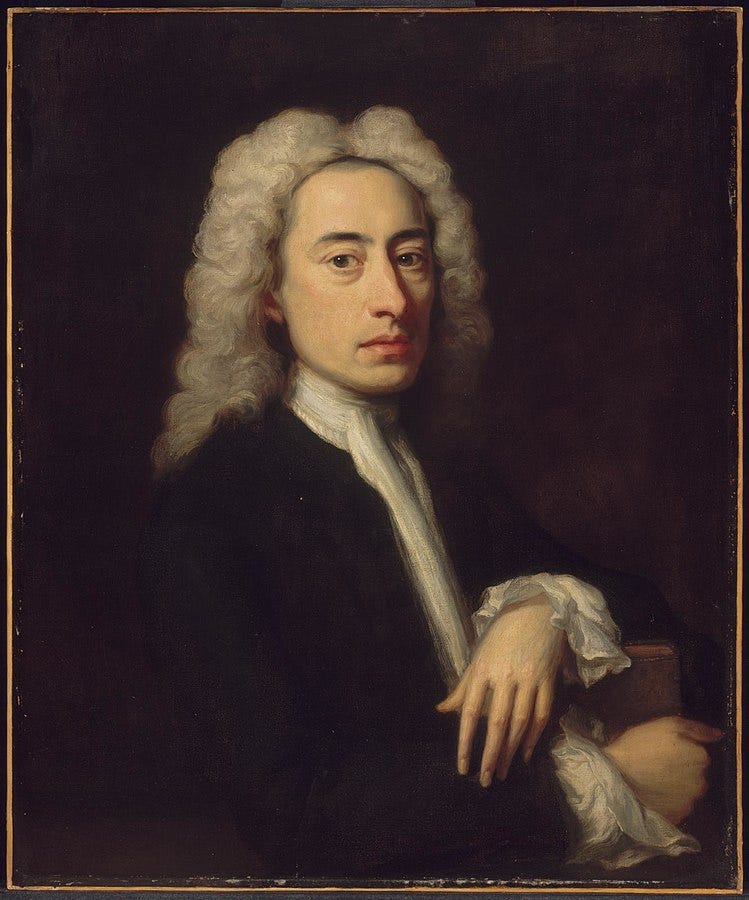
Looking back at the essay, I realise that I spent an inordinate amount of time (for me) preparing the course of the final sentence, like so much digging, filling in, and then digging once more the course of a river. I wanted the sentence to meander like a river in old age. The impulse for this came partly from reading Woolf—anytime I read her, my sentences tend to get longer, in unconscious emulation. She is a kind of syntactical launch pad in that respect.
The theme of the river itself came from the Auden poem, of course. But somewhere hovering just out of sight of my mind’s eye was Hart Crane. In particular, the lines that I now see were influencing me in some way were from The River, a part of his monumental poem, The Bridge:
Poised wholly on its dream, a mustard glow
Tortured with history, its one will — flow!
— The Passion spreads in wide tongues, choked and slow,
Meeting the Gulf, hosannas silently below.2
Crane at his best is hypnotically powerful—irresistible, in other words. It goes without saying that I couldn’t write like that even if I wanted to (the same goes for Woolf or Auden, of course). But—I don't know about you—I am quite happy to channel the spirit of writers I admire and probably do it more often than I notice. Somewhere, Jorge Luis Borges called language a “network of quotations.” And I believe these quotations are not just words, but the shape, texture, and rhythm of whole chunks of language.
Going back to Woolf, the sentence I quoted from her was “To draw the blinds and shut the door, to muffle the noises of the street and shade the glare and flicker of its lights—that is our desire.” This seems to channel rather beautifully, in turn, Alexander Pope’s Epistle to Dr. Arbuthnot (1735):
Shut, shut the door, good John! fatigu'd, I said,
Tie up the knocker, say I'm sick, I'm dead.
The dog-star rages! nay 'tis past a doubt,
All Bedlam, or Parnassus, is let out:
Fire in each eye, and papers in each hand,
They rave, recite, and madden round the land.3
Pope’s poem, however, seems to veer in the diametrically opposite direction of Woolf’s warm espousal of Johnson’s “common reader,” the term she adopted for use in her collections of reviews and essays.
Pope chose this epigraph from Cicero for his poem:
"... you will not any longer attend to the vulgar mob's gossip nor put your trust in human rewards for your deeds; virtue, through her own charms, should lead you to true glory. Let what others say about you be their concern; whatever it is, they will say it anyway."
(Cicero, De Re Publica VI.23)
The phrase “vulgar mob’s gossip” could hardly be more elitist.
In the poem itself, Pope is delightfully exercised by the severe criticism he has received, though at some point he affects or aspires to ease:
Oh let me live my own! and die so too!
("To live and die is all I have to do:")
Maintain a poet's dignity and ease,
And see what friends, and read what books I please.
But rather like the philosopher in Molière’s Bourgeois Gentilhomme,4 Pope cannot keep the poise or detachment he espouses for long. He soon loses his cool at times and finishes this passage, rather less at ease and excitedly recounting all the wicked things his detractors have done:
This prints my Letters, that expects a bribe,
And others roar aloud, "Subscribe, subscribe."
His pretended detachment may seem at times just so much papal bull, as it were... But it’s all good fun to read now. And somehow, that last line takes us back to Substack, allowing me to finish on a positive note.
Because Substack, which I posited as a kind of problem in respect to my reading in my post, also became a solution. Writing it acted as a kind of spur to action for me. Firstly, based on some helpful and wise reader comments and also reflecting on Amanda B. Hinton’s fine phrase about Writing Seasons, I began to think that my reading was also seasonal and wouldn’t always follow this pattern.
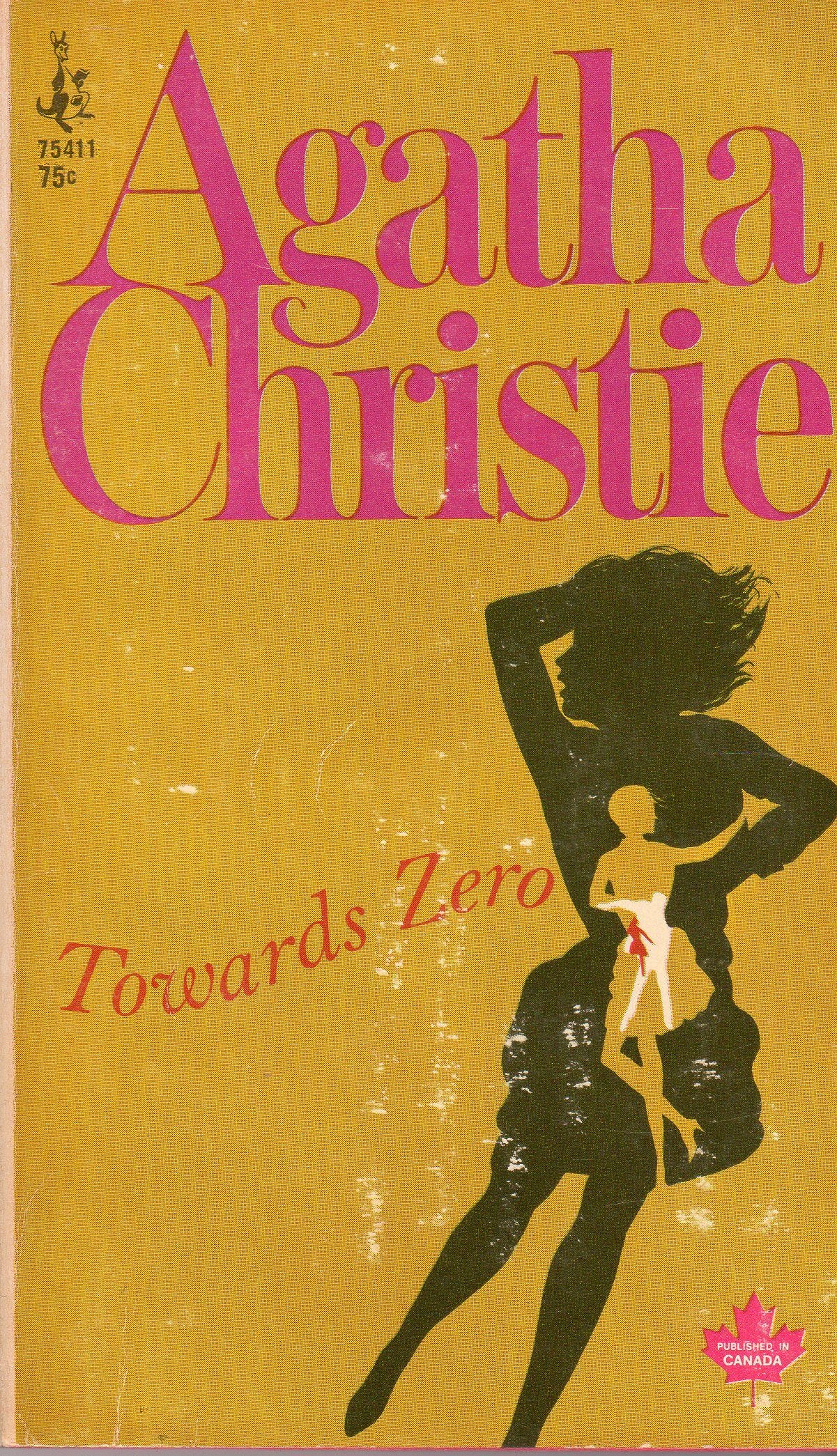
And then, just days after I wrote The Inconstant Reader, I read a complete non-Substack book for the first time in a month or more. The book was Towards Zero by Agatha Christie (the very first I’d ever read of hers). My reason for reading that book? It was an excellent essay by laura thompson, published, of course, here on Substack.
Thank you as ever for your support.
I sometimes wish that Substack was a little less Note and a bit more Query
https://www.poetrynook.com/poem/2-powhatans-daughter
https://www.poetryfoundation.org/poems/44895/epistle-to-dr-arbuthnot
I can’t resist quoting this snippet from the play:
PHILOSOPHY MASTER (to the dancing ,fencing and music masters, who are angrily quarrelling)) : What! Gentlemen, must you act this way? Haven't you read the learned treatise that Seneca composed on anger? Is there anything more base and more shameful than this passion, which turns a man into a savage beast?
[Moments later...]
FENCING MASTER: Get out, you dog of a philosopher!
MUSIC MASTER: Get out, you worthless pedant!
DANCING MASTER: Get out, you ill-mannered cur!
PHILOSOPHY MASTER: What! Rascals that you are ... (The philosopher flings himself at them, and all three go out fighting).
MONSIEUR JOURDAIN: Monsieur Philosopher!
PHILOSOPHY MASTER: Rogues! Scoundrels! Insolent dogs! [etc]
The breadth of your references is quite astounding, Jeffrey! I can admit some slight envy at the opportunity to become really familiar with the likes of Cicero, Lamb, Pope, et al., but the Rhetoric dept at UC Berkeley was thoroughly modern - "Is this literature?" my favorite professor asked on the first day as he handed out pictures of Madonna grabbing her crotch. 😂 (We did dabble in Woolf, thank goodness.) But at the least it gave me a lifelong curiosity about all its different guises. 🤓
Remarkable assimilation Jeffrey! I’m blown away by your ability to reference (with passion!) so many disparate authors to support your theme. I picture your brain with a very extensive and organized card catalog system. :) Substack certainly gobbles up reading time but pleasurably so! And has also become a launching pad for my evening reads (with devices plugged in downstairs) where I can rewind time and live between the page.